
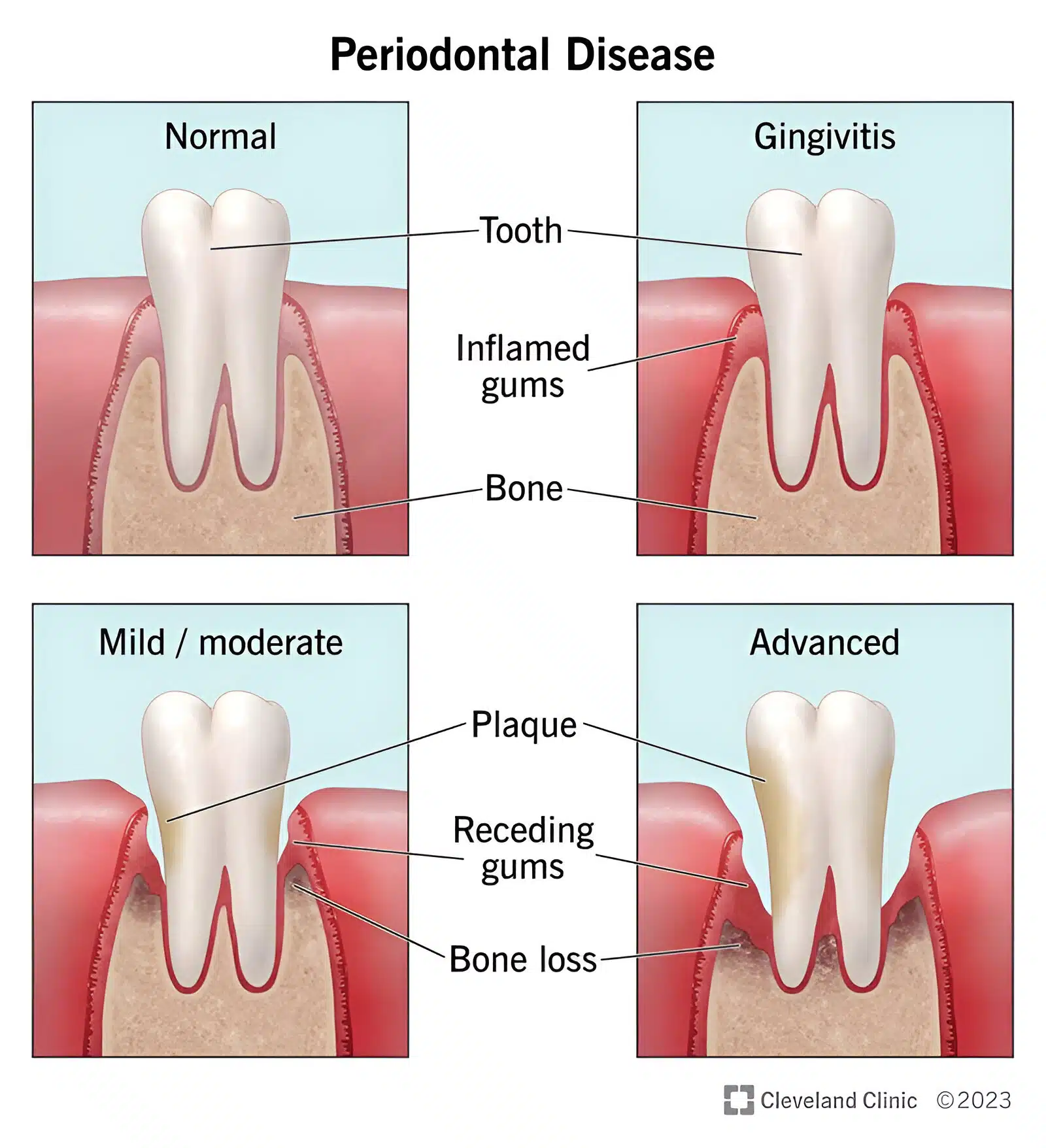
What is Periodontal Disease?
Periodontal disease refers to a form of gum disease that affects the gum tissue and bone and tissue that hold your teeth in place. If left untreated, periodontal disease can lead to tooth loss. The major causes of periodontal disease are the bacteria that cause gum disease. If you do not remove plaque from the surfaces of your teeth, it can harden and form tartar, which a hygienist will remove during scaling and root planing.
In the early stages of periodontal disease, the gums may bleed when you brush and floss. The gum tissue can also start to pull away from your teeth, creating pockets where bacteria can thrive. Gum disease may also cause bad breath and contribute to overall health issues, such as heart disease. To treat gum disease and prevent periodontal disease, it is important to remove plaque through proper oral hygiene habits and regular visits to the dentist.
Stages of Gum Disease
There are different stages of gum disease that can affect both your teeth and gums. The early stages of gum disease include redness and swelling along the gum line, as well as periodontal pockets forming around your teeth. If left untreated, gum disease can cause plaque buildup and lead to bone loss around the tissues that support your teeth.
As periodontal disease progresses, you may experience more severe symptoms, such as root surfaces becoming exposed and bone around your teeth deteriorating. Your dentist may use a tool called a periodontal probe to measure the depth of the periodontal pockets and determine the stage of the disease. If necessary, they may refer you to a periodontist for further treatment, such as gum graft surgery, to restore the tissue around your teeth.
Role of Bacteria in Periodontal Disease
Plaque and bacteria are the main culprits when it comes to causing periodontal disease, also called gum disease. When you don’t brush your teeth regularly, plaque can build up on your teeth and turn into tartar. This can lead to loss of bone around your teeth and the formation of pockets around your teeth. As the disease progresses, your gums may pull away from the teeth and you may lose the bone that holds your teeth in place. If you notice any signs of gum disease, such as bleeding gums or persistent bad breath, it’s important to see a dentist or gum specialist right away.
Researchers have also found links between gum disease and other health issues, making it crucial to receive early treatment to stop the disease. A periodontist makes use of various treatment options, such as gum surgery, to remove bacteria from your teeth.
Common Symptoms of Gum Disease
Gum disease, also known as periodontal disease, is a common condition that affects many adults. If you are not practicing good oral hygiene, you are likely to get gum disease. Some common symptoms of gum disease include tender or bleeding gums, bad breath that won’t go away, sensitive teeth, and gums that are pulling away from your teeth. As the disease progresses, you may notice lost bone and tissue around your teeth. This lost bone around your teeth can lead to your teeth becoming loose and even falling out. When this happens, your teeth may need to be removed and replaced with implants or dentures.
The bacteria and plaque buildup on your teeth can lead to gum disease. Plaque is a sticky film that forms on the teeth and can harden into tartar if not removed. If you do not remove plaque and tartar, they can irritate the gums and the bone that supports the teeth, leading to gum disease. This disease may make the gums and the bone pulling away, causing pockets to form between the teeth and gums. Measuring the pockets around the teeth can help determine the severity of the disease. Depending on the severity, the dentist may need to smooth out any rough areas on the root surfaces of the teeth to help the gums reattach to the teeth.
Periodontal means relating to the bone and tissue around the teeth. This is where gum disease attacks, leading to the lost bone around the teeth. Without treatment, the disease can progress to the point where new bone can grow……to hold them in place. If you are experiencing any of these symptoms, it is important to see your dentist right away. The dentist will refer you to a periodontist if necessary for further treatment. Gum disease, if left untreated, can become a major health risk and the leading cause of tooth loss. Taking care of your oral hygiene and having regular dental check-ups can help prevent gum disease and keep your mouth healthy.
What are the Signs of Gingivitis
Gingivitis is a common dental issue that can lead to more serious conditions if left untreated. Some signs of gingivitis include red, swollen, or bleeding gums, bad breath, and receding gums. You may also notice tenderness or pain when brushing or flossing. If you experience any of these symptoms, it is important to see your dentist for a proper diagnosis and treatment plan. A buildup of plaque and tartar on the teeth, which can harbor harmful kinds of bacteria, usually causes gingivitis. To help prevent gingivitis, it is important to practice good oral hygiene, including brushing and flossing regularly, and visiting your dentist for regular cleanings. With proper treatment, gingivitis can be reversed, and new bone can grow to support the teeth and gums. Don’t ignore the signs of gingivitis – your oral health is too important to neglect.
Impact of Periodontitis on Oral Health
Periodontitis is a serious gum infection that can have a significant impact on oral health. If left untreated, periodontitis can lead to gum recession, tooth loss, and damage to the bone that supports the teeth. One of the main causes of periodontitis is the build-up of plaque and tartar on the teeth and gums. Plaque is a sticky film of bacteria that forms on the teeth and can harden into tartar if not removed regularly through proper oral hygiene practices. If allowed to accumulate, plaque and tartar can irritate the gums, causing inflammation and leading to gum disease. As periodontitis progresses, it can also affect other parts of the mouth, including the roof of your mouth. Without proper treatment, periodontitis can have serious consequences for oral health, highlighting the importance of regular dental check-ups and good oral hygiene habits.
Link Between Poor Oral Hygiene and Gum Health
Proper oral hygiene is crucial in maintaining healthy gums. When plaque, a sticky film of bacteria, builds up on the teeth and along the gum line, it can lead to gum disease. If left untreated, plaque hardens into tartar, and your hygienist is the only one who can remove it. Poor oral hygiene practices, such as irregular brushing and flossing, can exacerbate the accumulation of plaque and tartar, leading to inflammation and infection of the gums.
Regular visits to the dentist for professional cleanings are essential in preventing gum disease. Dental cleanings not only help remove plaque and tartar that are missed during regular brushing and flossing, but they also allow the dentist to assess the overall health of the gums and identify any potential issues before they escalate. By maintaining good oral hygiene habits at home and scheduling regular dental check-ups, individuals can help prevent gum disease and promote overall gum health.
Relationship Between Gum Disease and Heart Health
Researchers have linked gum disease to a number of heart health issues. Research has shown that there is a significant relationship between the two, with individuals who have gum disease being at a higher risk of heart problems. One theory is that the bacteria that cause gum disease can enter the bloodstream and contribute to the development of heart disease. Inflammation is also a common factor in both conditions, as gum disease can lead to inflammation in the body, which can then affect the heart. It is important to take care of your oral health and regularly visit Elite Dental Studio to prevent gum disease and reduce the risk of heart health complications.
Preventive Measures for Periodontal Disease
Periodontal disease is a serious condition that can lead to gum inflammation, tooth loss, and even bone damage in severe cases. To prevent this disease, it’s important to take preventive measures to maintain good oral hygiene. Regular brushing and flossing are essential in removing plaque buildup that can lead to gum disease. Visiting the dentist for regular cleanings and check-ups can also help to catch any early signs of gum disease before it progresses. Additionally, a healthy diet and avoiding tobacco products can also contribute to preventing periodontal disease.
Importance of Regular Dental Check-ups
Regular dental check-ups are crucial for maintaining good oral health. By visiting Elite Dental Studio regularly, you can catch any potential issues early on before they become more serious and require invasive treatment. This can save you both time and money in the long run. Additionally, regular check-ups allow Dr. Perry to monitor the overall health of your teeth and gums, helping to prevent problems such as cavities, gum disease, and tooth decay. Your dentist can also provide you with valuable advice on proper oral hygiene practices and recommend any necessary treatments or procedures. Overall, regular dental check-ups are an important part of maintaining a healthy smile and preventing more serious dental issues down the road.